
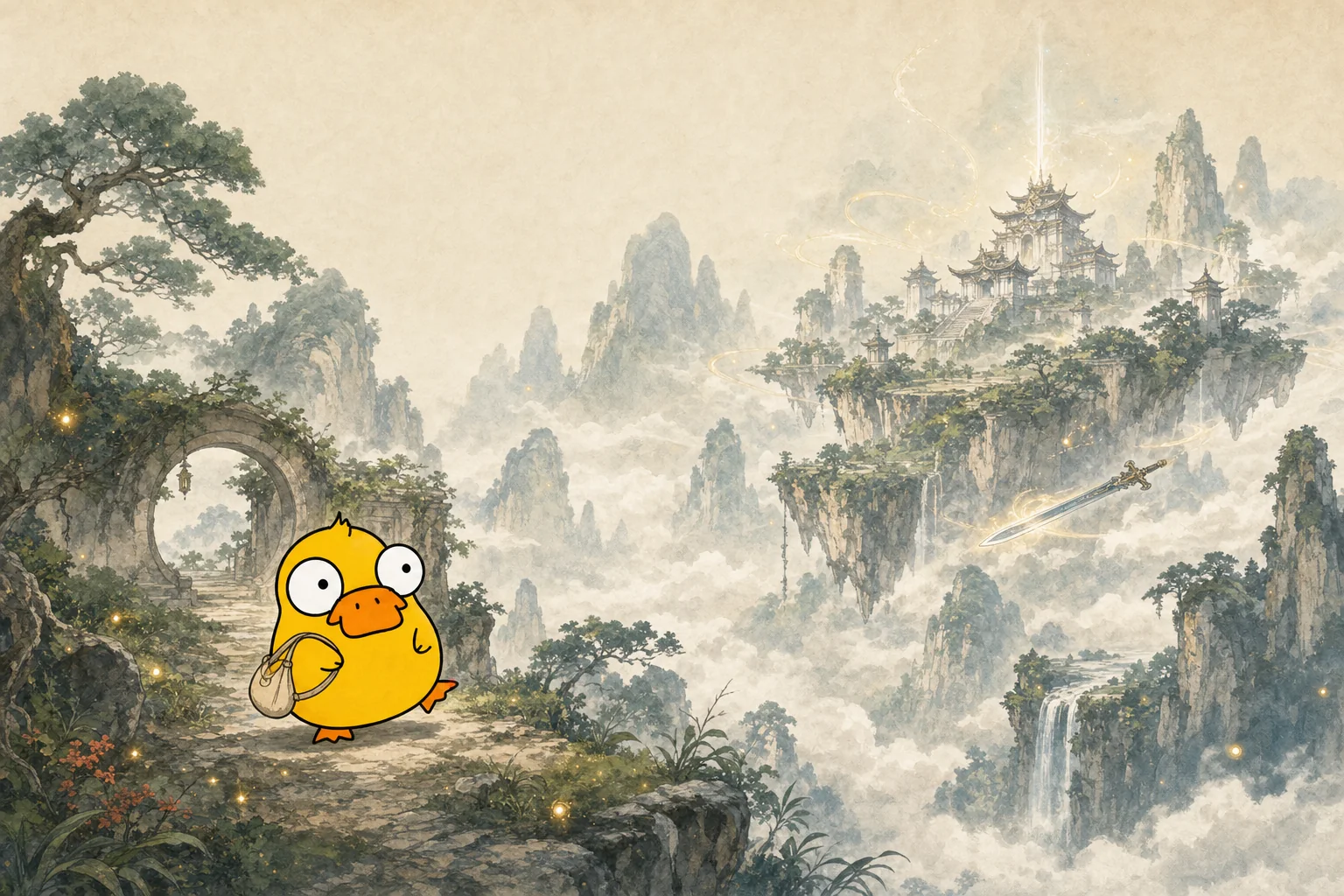
A character sits cross-legged. Light gathers around them. A few moments later, they have “broken through.”
People who are not related call one another Senior Brother and Junior Sister. Someone who looks twenty may be several centuries old. And whenever a character becomes more powerful, the sky suddenly decides to strike them with lightning.
If this is your first xianxia drama, being confused is completely normal.
Xianxia stories rarely stop to explain their world from the beginning. They assume the audience already understands cultivation, sects, spiritual qi and heavenly tribulations—just as a Western fantasy series may assume you know why vampires avoid sunlight.
The good news is that you do not need an encyclopaedia of Chinese mythology before pressing play. Learn these eight ideas and most xianxia worlds will become much easier to follow.
One rule matters more than all the others:Xianxia does not have a single rulebook. Every writer can redesign the power levels, supernatural beings and magic system. What follows is a guide to common patterns, not universal law.
1. Xianxia, wuxia and xuanhuan are not the same thing
All three may feature flowing robes, swords and people soaring over rooftops, so it is easy to mix them up.
Here is the quickest useful distinction:
- Wuxia centres on mortal martial artists and the jianghu, the world of wandering fighters, clans and competing codes of honour. Abilities can be exaggerated, but the story generally remains in the human world.
- Xianxia pushes that world into the mythic. Characters cultivate towards immortality, cast spells, ride flying swords and encounter spirits, demons, magical beasts and multiple realms.
- Xuanhuan is a looser category of Chinese fantasy. It may draw on Chinese traditions, invent a completely new power system, or mix in Western magic, science fiction and game-like elements.
Think of them as overlapping points on a fantasy spectrum, not three sealed boxes.
The Untamed has cultivation clans, magical tools and fierce corpses, placing it in a cultivation world close to xianxia. Battle Through the Heavens has an elaborate progression system, yet is generally described as xuanhuan. Viewers and platforms sometimes disagree about labels. That does not mean you have misunderstood the story.
The most useful question is not “Which label is technically correct?” but “What does this particular world allow its characters to do?”
A quick guide using familiar titles
If the definitions still feel abstract, these internationally familiar titles offer a useful shortcut:
- **Crouching Tiger, Hidden Dragon is wuxia.* Its fighters leap across rooftops and possess skills far beyond real-world martial arts, but the story remains grounded in the mortal jianghu*: martial lineages, personal desire, honour and the consequences of human choices. Li Mu Bai is not trying to become a god or ascend to another realm. Spectacular lightness skill does not automatically make a story xianxia.
- **The Untamed sits close to xianxia’s cultivation tradition.** Its characters belong to cultivation clans, channel spiritual power and use magical instruments, talismans and formations. Fierce corpses and resentful energy are part of the world. Yet the story is not primarily about climbing a fixed ladder towards ascension, which makes it a useful example of how genre boundaries overlap.
- **Love Between Fairy and Devil is an accessible xianxia romance.** Its story moves among an immortal realm, the Moon Tribe and the mortal world. Its central characters possess supernatural identities and extremely long lives, while love is shaped by primordial spirits, fate and the laws of different realms. That takes it well beyond the mortal world of wuxia.
- **Battle Through the Heavens is generally xuanhuan.* It has its own system of douqi*, Heavenly Flames and ranks such as Dou Zhe and Dou Shi. Characters continually grow stronger, but the system is invented for this world rather than built around the familiar path from Qi Refining and Foundation Establishment towards Daoist immortality.
English-language streaming services may place the last three under the broad label Fantasy, while fan communities and Chinese genre traditions divide them more precisely. Labels are useful signposts, but the setting, source of power and characters’ goals tell you more.
2. Cultivation is the process of becoming more than human
The Chinese term xiulian is usually translated as “cultivation.” It has nothing to do with farming, and it means more than practising a few martial-arts moves.
In xianxia, cultivation is the long process of transforming the body, mind and spirit. Characters gather power, train themselves and seek a deeper understanding of the world. As they advance, they may live longer, perceive more and wield stronger abilities. Some eventually leave ordinary human limits behind altogether.
When a character closes their eyes and glowing particles begin to gather, they may be:
- sensing spiritual qi in the surrounding world;
- drawing that qi into the body;
- circulating it through the meridians;
- gathering it in the dantian;
- attempting to break through to a new realm.
For a quick mental picture, imagine meditation, physical training and levelling up happening at the same time. Just remember that cultivation is not always about raising combat stats. Some stories also demand insight, emotional discipline or a painful personal sacrifice.
In A Record of a Mortal’s Journey to Immortality, advancement depends heavily on time, resources and cautious decisions. The protagonist cannot simply believe in himself and become stronger. He needs techniques, pills and spirit stones—and he must survive long enough to use them.
This is why losing one’s cultivation is so devastating. A character has not merely lost access to magic for an afternoon. They may have lost decades or centuries of accumulated power, along with their status and ability to protect themselves.
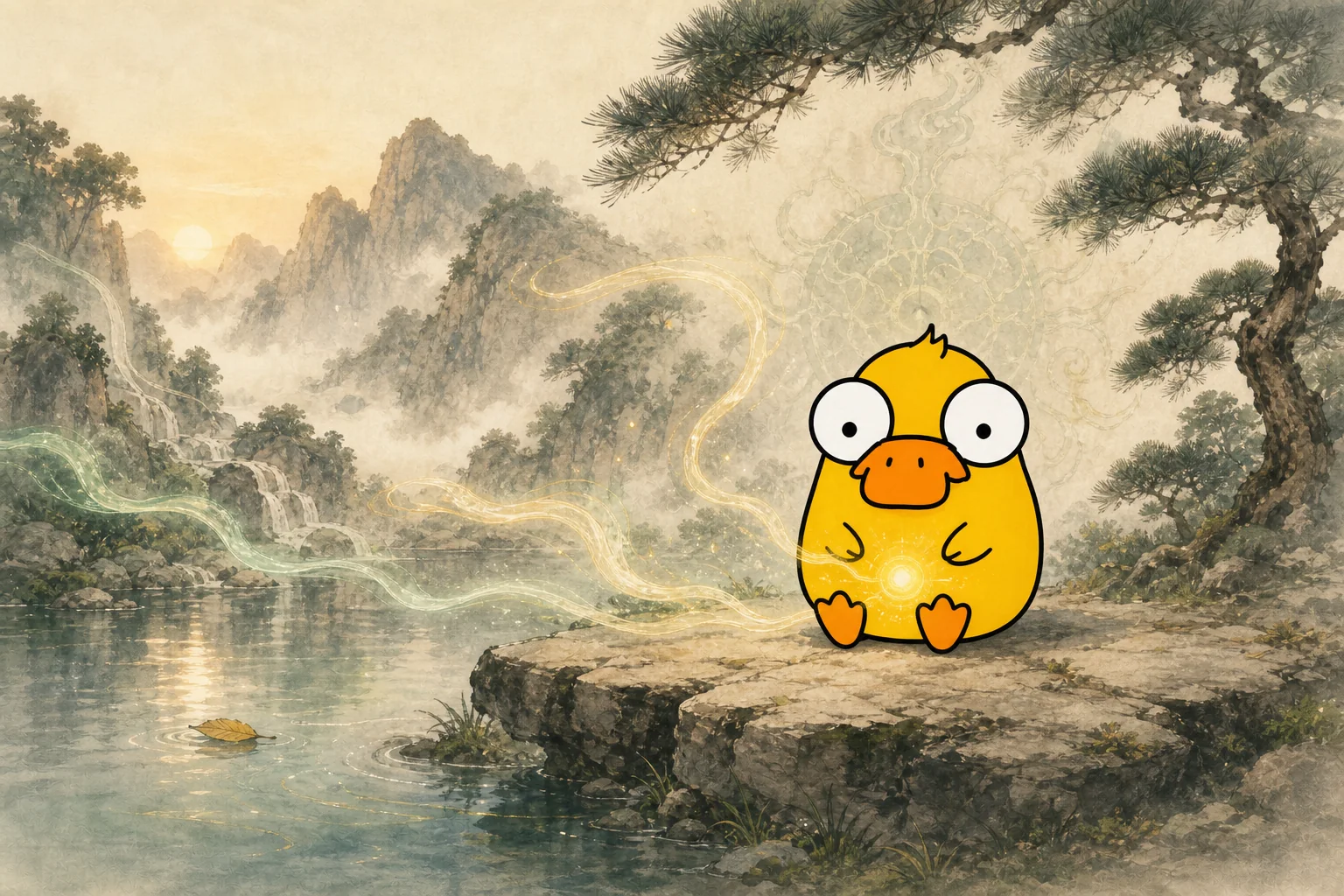
3. Qi, meridians, the dantian and spiritual sense form an imagined energy system
These terms often appear together, and subtitles can make them feel more mysterious than they need to be.
Spiritual qi
Spiritual qi is energy found in the world, in living things or in special materials. Cultivators absorb, store and use it.
It can sometimes function like mana, but the comparison only goes so far. Qi may be connected to health, landscape, life and the condition of the world—not merely to how many spells a character has left.
Meridians
Meridians are the channels through which energy travels inside the body. The language is inspired by traditional Chinese ideas about the body, but xianxia turns it into a fantasy system.
Damaged meridians do not mean that a modern anatomical blood vessel has been cut. Think of the character’s internal energy network being disrupted.
Dantian
The dantian is usually the centre where a cultivator gathers, stores or transforms power. It is helpful to picture an energy core, but it is not a magical organ you could locate on an anatomy chart.
When someone’s dantian is destroyed, they may survive but lose the ability to cultivate. In many stories, that is nearly as frightening as death.
Spiritual or divine sense
Spiritual sense is perception that reaches beyond ordinary sight and hearing. A powerful cultivator may use it to scan a distant place, detect hidden objects, control a magical treasure or attack another person’s mind.
If someone senses an enemy without turning around, the drama may not have skipped a clue. The character may have already “seen” them through spiritual sense.
Put the four ideas together and a common line becomes much clearer:
“His meridians are damaged, his dantian cannot gather qi, and his spiritual sense is weak.”
In plain language, his internal energy network, power centre and supernatural perception are all failing.
Bringing cultivation back into real life
Qi, meridians, the dantian and spiritual sense are not concepts from modern science. But if we read xianxia as an imaginative language for human growth, they can help us think about forces that cannot be seen and yet genuinely shape a person.
Everyone is nourished by an environment. Language, knowledge, tradition, aesthetics, trust between people and the experience accumulated by a community all find their way into how someone thinks and lives.
In the metaphorical language of xianxia:
- Qi resembles the cultural, intellectual, emotional and spiritual nourishment available in an environment;
- Meridians resemble the pathways through which a person receives, understands and processes that nourishment;
- The dantian resembles the inner place where outside experience settles and becomes personal strength;
- Spiritual sense resembles the perception that grows with experience—the ability to notice relationships, emotions and rules beneath the surface;
- A breakthrough resembles the moment when accumulated growth changes how a person understands the world.
A film lover who moves to a city with an active creative community, repertory cinemas and a culture of discussion may suddenly develop much faster. A writer who has worked alone for years may enter a supportive circle of readers and peers, then make more progress in a few months than they previously managed in several years.
That is a little like finding a spiritually abundant place in xianxia. The environment cannot cultivate on your behalf, but it can make it easier to absorb, connect and transform what surrounds you.
Different cultures use different languages to describe human development. What makes xianxia distinctive is that it turns an invisible process into visible energy, pathways and realms.
Growth is universal. Cultivation is one distinctly Chinese way of imagining it.
4. Cultivation realms resemble levels, but there is no universal chart
Cultivation stories often divide a character’s progress into realms. After gathering enough strength or insight, a cultivator attempts a breakthrough into the next stage.
Qi Refining, Foundation Establishment, Golden Core and Nascent Soul are common names. They are not an official ladder that every xianxia story must use. A writer can remove stages, add twenty more or create a completely new system.
When you begin a new series, resist the urge to search for one master chart covering the entire genre. You only need three pieces of information:
1. Where is this character now? 2. What do they need for their next breakthrough? 3. Why is someone one realm above them so dangerous?
A Record of a Mortal’s Journey to Immortality uses a progression familiar from many cultivation novels. Battle Through the Heavens uses its own ranks, including Dou Zhe and Dou Shi. Forcing the first series’ chart onto the second only creates more confusion.
A higher realm does not always guarantee victory, either. Techniques, experience, magical treasures, bloodlines and quick thinking can allow a weaker character to defeat a supposedly stronger opponent.
When subtitles mention “fighting above one’s realm,” that is the basic idea: someone has defeated an opponent they should not have been able to beat on paper.
5. The Dao is both the pattern of the world and the path a person chooses
Dao may be the hardest xianxia word to fit neatly into one English sentence.
It can mean the underlying way the universe works. It can also mean the path through which a person understands the world and shapes themselves. The further cultivators advance, the less they can rely on gathering raw energy alone. They must also understand what they are pursuing.
A sword cultivator’s “Sword Dao” is not simply swordsmanship at maximum level. The sword may embody that character’s convictions, personality and way of confronting the world. One person’s path may be protection, another’s freedom, and another’s belief that strength is the only truth.
Gaining insight into the Dao is not the same as receiving a random new skill. It usually means that an experience has changed the character’s understanding of themselves or the world—and that understanding changes what they can do.
This also helps explain the pursuit of immortality and ascension.
For one cultivator, immortality means freedom from death. For another, it offers knowledge, independence, the power to protect someone, or entry into a much larger world. Some people simply want power because everyone around them is fighting for it. Xianxia does not assume that seeking eternal life makes a person wise or good.
Ascension usually means leaving the current world for a higher realm. It is rarely a peaceful retirement after completing the game. In many stories, the upper realm is simply a new beginning filled with even stronger opponents.
6. A sect is part school, part institution and part chosen family
English subtitles often translate menpai or zongmen as “sect.” In modern English, that word may suggest a small religious group. A cultivation sect does much more than that.
A major sect may:
- recruit and train disciples;
- preserve secret techniques and magical treasures;
- distribute pills, spirit stones and places to cultivate;
- protect its territory and members;
- compete or negotiate with other sects;
- enforce rules and punish those who break them.
As a temporary comparison, imagine a magical academy, a monastery and a family business combined. Disciples go there to learn, but they also enter a network of loyalty, hierarchy, affection and politics.
People without a blood relationship call one another Senior Brother, Senior Sister, Junior Brother and Junior Sister because they belong to the same lineage.
- Shifu / Shizun: the master who teaches you;
- Shixiong / Shijie: senior male or female members of your lineage;
- Shidi / Shimei: junior male or female members;
- Sect leader: the head of the organisation;
- Elder: a senior cultivator who may also govern or teach.
These titles usually indicate relationship and seniority within the lineage, not biological age. A young-looking martial uncle may be centuries older than a grey-haired disciple.
Sects are not merely teams wearing different colours. They may follow different values, practise different techniques, control different resources and take opposing political positions. Knowing where a character belongs often explains more than knowing their numerical power level.
7. A heavenly tribulation is not ordinary weather—or necessarily a punishment
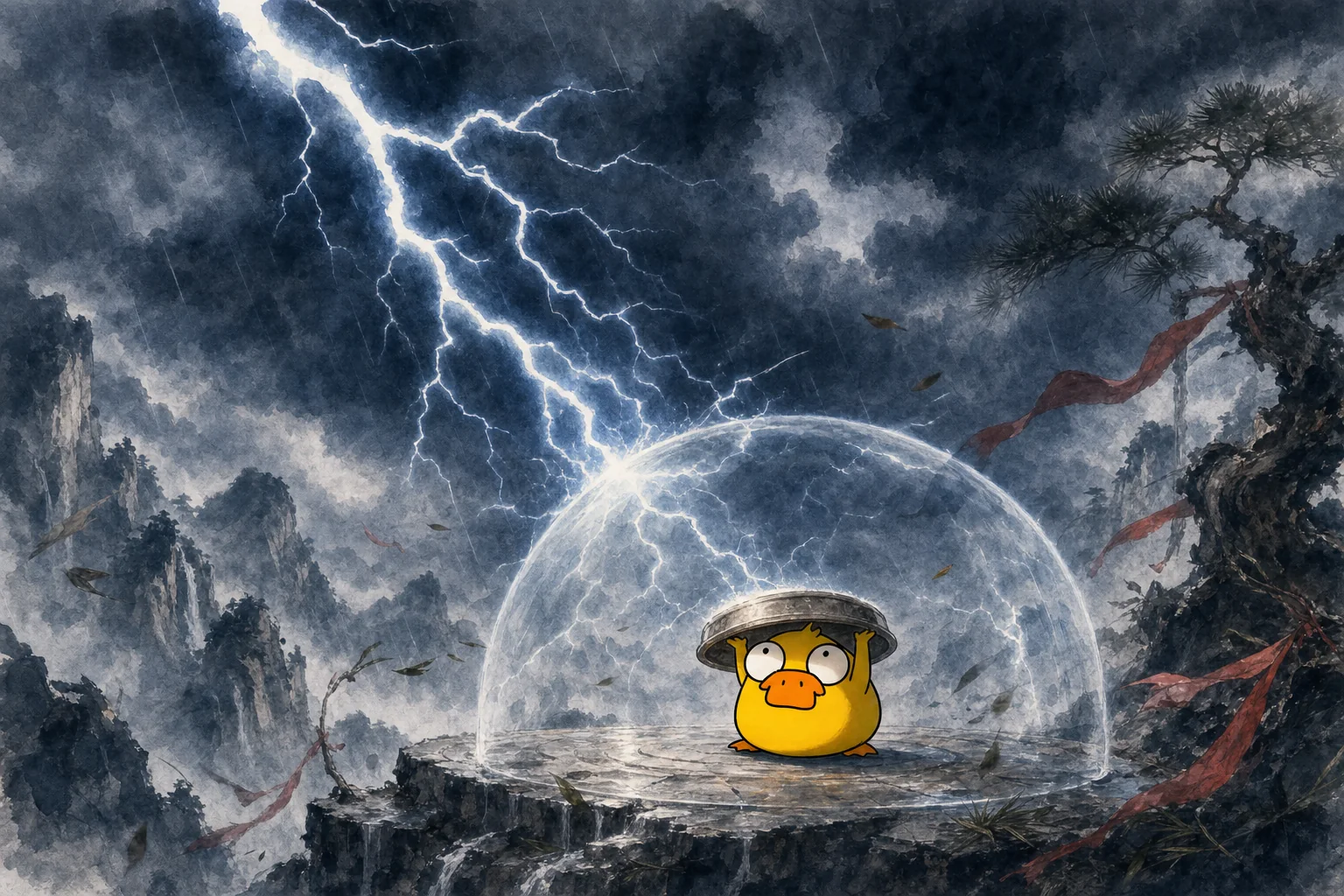
When cultivators attempt to exceed mortal limits, the rules of heaven and earth may test or resist them. This ordeal is a tribulation.
The most recognisable version is the lightning tribulation: clouds gather and bolts strike the person attempting a breakthrough. But a tribulation does not always involve lightning, and it does not necessarily mean the character has done something wrong.
Think of it as a dangerous stress test:
- Can the body withstand greater power?
- Is the mind stable enough?
- Will old fears and attachments take control?
- What does it cost to defy an ordinary fate?
A cultivator may prepare defensive formations, pills and protective treasures before facing the lightning. Other stories use an “inner demon” tribulation, forcing the character to confront their deepest fear, guilt or obsession.
A tribulation can therefore be both a spectacular battle and an external expression of an internal conflict.
Its rules change from one story to another. If one drama has nine bolts of lightning, do not assume the next drama owes its hero the same nine.
8. Pills, talismans, formations, spirit stones and treasures are the cultivator’s toolkit
When all these objects appear in the same episode, they can look like a table full of game items with no instructions. Each has a distinct job.
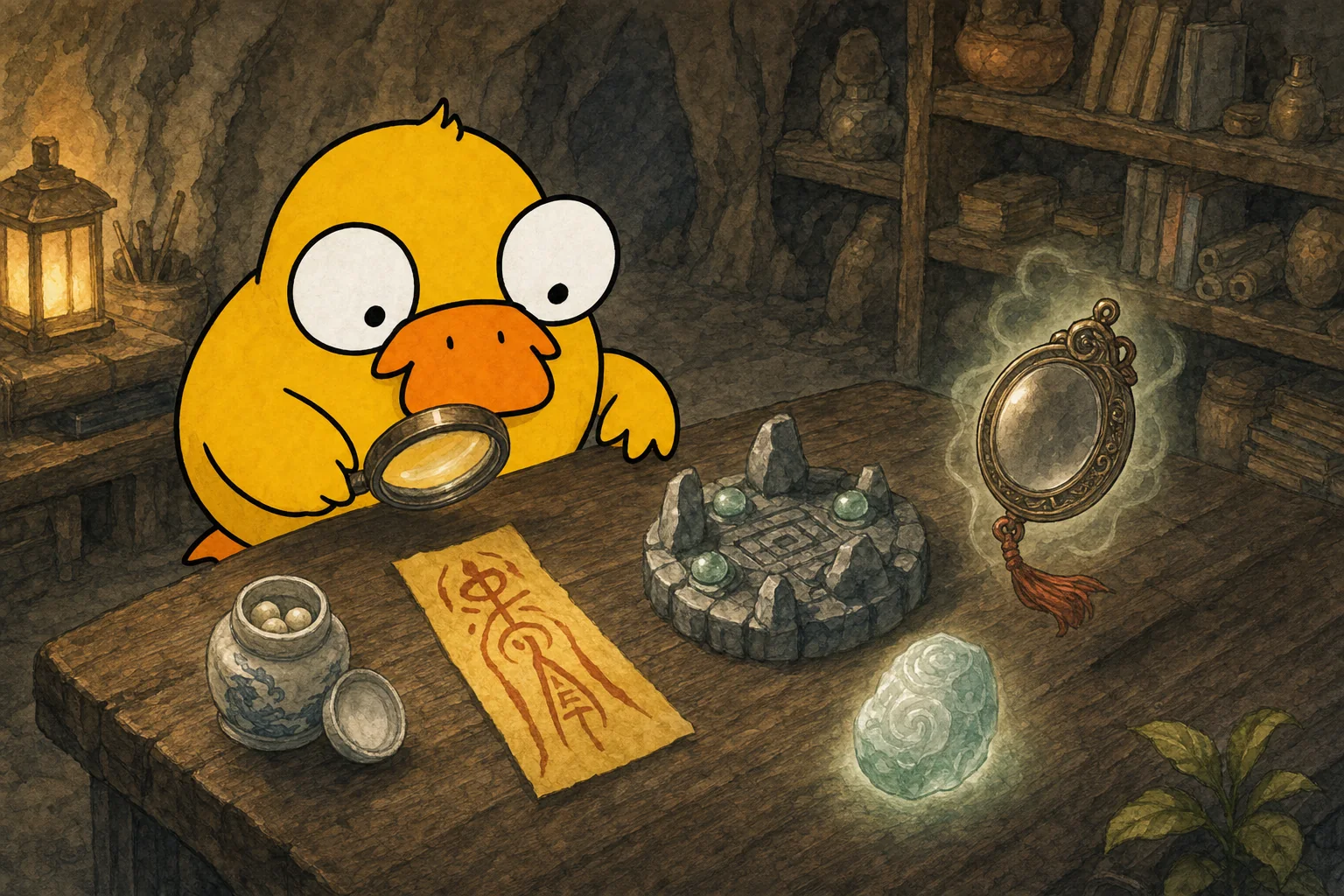
Pills and elixirs
Pills may heal injuries, restore energy, assist a breakthrough or transform the body. They are both cultivation resources and sources of power.
That is why characters constantly refine pills, hunt rare herbs or fight over a single bottle. One exceptional pill may save decades of cultivation.
Talismans
A talisman is something like a spell prepared in advance. A cultivator stores power and instructions in paper or another medium, then activates it when needed.
Talismans may attack, defend, conceal someone’s presence, carry a message or restrict movement.
Formations
A formation combines locations, materials and rules to create an effect across an area. It may protect an entire mountain or trap an enemy inside a shifting space.
“Magic circle” is a useful first comparison, but xianxia formations are often tied to direction, terrain, the movement of qi and the knowledge of the person who arranged them.
Spirit stones
Spirit stones contain usable spiritual qi. Cultivators can draw energy from them, and many worlds also use them as currency.
They function as both batteries and money. When sects fight over a spirit-stone mine, they are competing for an energy supply and an economic resource at the same time.
Magical treasures
Magical treasures are special objects created, claimed or powered by cultivators. A flying sword, mirror, bell, gourd or even an umbrella may become one.
They are more than ordinary weapons. Some recognise an owner, some grow stronger, and some carry the memories or secrets of a previous master.
Place all five tools in one scene and the logic becomes easier to see:
When enemies attack, the disciples use spirit stones to activate the mountain’s defensive formation, attach talismans to conceal their presence, swallow pills to restore their qi and finally summon their flying swords.
These are not five random pieces of “Eastern” decoration. Together, they form a system of technology and resources.
Viewing Bonus 1: Gods, immortals, yao and demons are not four fixed moral teams
English subtitles may translate both yao and mo as “demon,” which can evoke the Christian idea of a fundamentally evil supernatural being.
Chinese fantasy uses these categories in more varied ways:
- Immortals are often beings who have transcended ordinary life through cultivation;
- Gods may possess an innate divine status, an official cosmic role or a position defined by that particular story;
- Yao are often animals, plants or other living things that have cultivated into conscious forms;
- Mo may describe a species, a path of power, a political label or a state caused by corrupted cultivation.
None of these identities automatically determines whether a character is good. An immortal court can be hypocritical; a yao can be loyal and compassionate. “Righteous” and “demonic” may describe genuine ethical choices, but they can also be labels imposed by whoever holds power.
In Love Between Fairy and Devil, for example, the conflict between the fairy realm and the Moon Tribe is more useful to read as a long political and ethnic conflict than as a simple war between heaven and hell.
The safest approach is to learn how each drama defines its groups before judging individual characters.
Viewing Bonus 2: Why do characters keep entering the mortal world, reincarnating and losing their memories?
Immortality creates an unusual problem for romance: if everyone lives for tens of thousands of years, ordinary choices can lose their urgency.
Xianxia romance often sends a long-lived character into the mortal world, where love, responsibility, loss and death must be experienced within a limited lifetime. This may be described as undergoing a mortal trial or tribulation.
The experience is not always a punishment. It may teach the character an emotion, settle a karmic debt or help them overcome an obstacle in their cultivation.
Reincarnation and memory loss allow two people to meet again under new identities. They can reverse an old power imbalance and ask a question particularly well suited to romance:
Without the memories of a previous life, would you still fall in love with the same person?
Eternal Love and Till the End of the Moon both use multiple identities, lifetimes or trials of fate. As always, each story creates its own rules for memory, reincarnation and karma.
What do you actually need to remember during your first xianxia drama?
You do not need to memorise every realm, identify every ancient mythical beast or finish a relationship chart before the end of episode one.
Keep asking four questions:
1. Where does power come from in this world? 2. What limit is the protagonist trying to overcome? 3. Which sect, people or faction do they belong to? 4. What rules has this particular story established?
Xianxia is not a subject you must pass before you are allowed to enjoy it.
Nor is it only a fantasy about a gifted few collecting supernatural powers. Every person is slowly shaped by environment, experience and choice. We all search for people, places and paths that allow us to grow. Xianxia calls that shared process cultivation—and gives visible form to changes that ordinary life keeps hidden.
Once you stop trying to explain every series with one universal glossary, the meditation, flying swords, lightning tribulations and reunions across multiple lifetimes begin to form a very particular kind of romance:
A person may spend centuries searching for their Dao—and still choose to walk through the mortal world all over again for someone they love.
Comments
Listening for comments…