
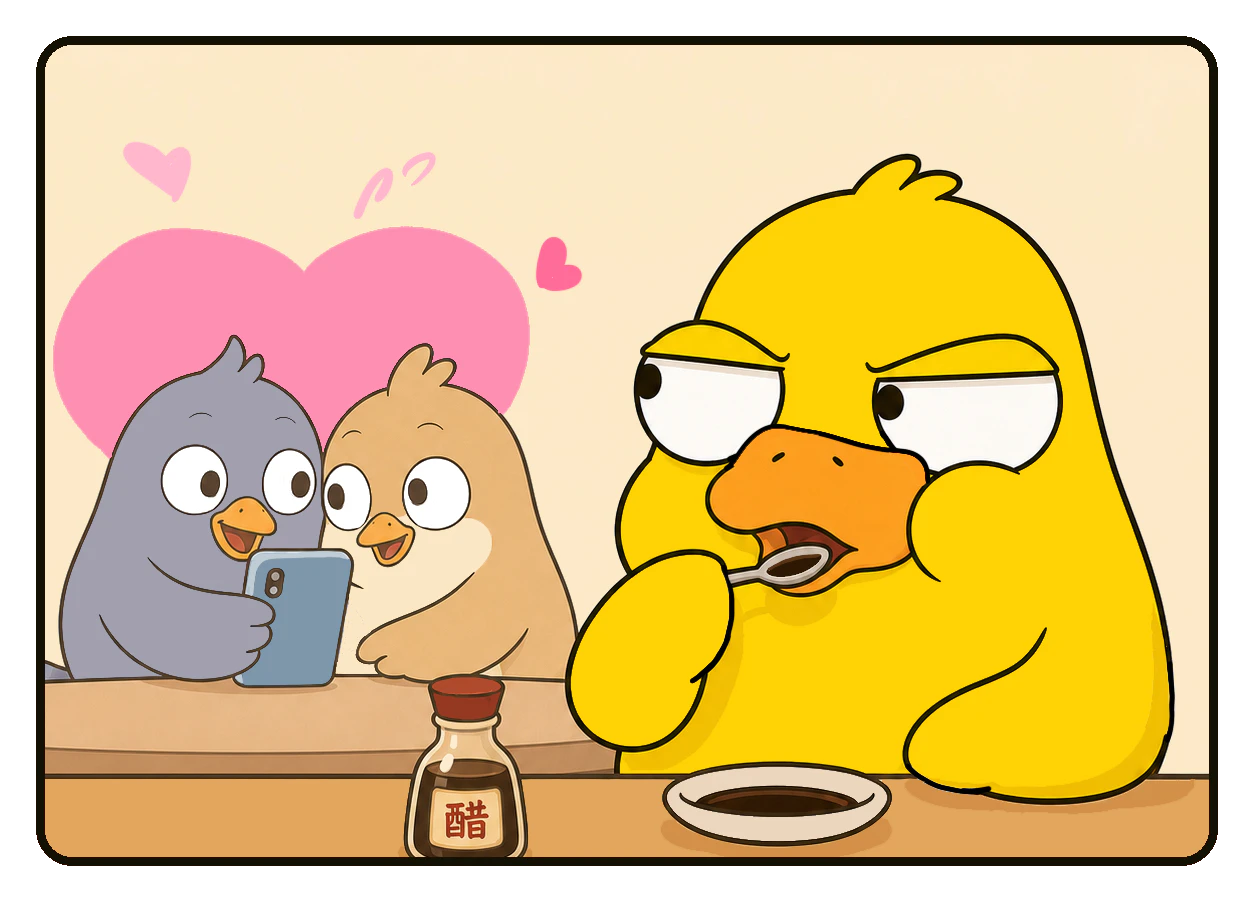
吃醋 ·
Literally: eat vinegar Usually means: to be jealous
Why vinegar?
Vinegar is sour. In Chinese, a sour feeling can describe the small, uncomfortable sting of jealousy — so 吃醋 became an everyday metaphor for it.
You may also hear a dramatic Tang-dynasty story about a minister’s wife being offered vinegar instead of poison. It is a popular legend, but not a confirmed origin. The “sour feeling” explanation is the useful part to remember.
How people actually use it
你是不是吃醋了?Nǐ shì bú shì chī cù le?Are you jealous?
You might say this playfully when a friend looks annoyed that their partner is giving someone else too much attention.
妹妹看到妈妈抱弟弟,有一点吃醋。Mèimei kàn dào māma bào dìdi, yǒu yìdiǎn chī cù.The little sister felt a little jealous when she saw Mum holding her younger brother.
A small tone note
吃醋 is very common in romance and close relationships, but it can also describe ordinary jealousy between siblings or friends. With someone you do not know well, asking “Are you jealous?” can sound like you are guessing at their feelings — so use it gently.
Try another thing Chinese people “eat”
吃瓜 — follow the gossip or drama 吃土 — be broke after spending too much
Comments
Listening for comments…