
You have spent months planning the trip. Now you are finally on the plane, crossing an ocean toward a country that feels both unfamiliar and irresistible.
Independent travel is rewarding partly because it comes with surprises. Some become the stories you tell for years. Others need solving on the spot. In China, the first one may greet you as soon as you leave the airport: the language barrier.
On a first trip through major cities, you will usually find English alongside Chinese at airports, hotels, high-speed railway stations and popular attractions.
The harder moments tend to begin when you step away from those visitor-friendly spaces. A neighbourhood restaurant may have a Chinese-only menu. A payment screen may make little sense. A driver may not recognise the English name of your hotel.
You do not need fluent Mandarin to deal with these situations. You do need three things:
A phone with a reliable connection, key information saved in Chinese, and a backup plan for when the phone fails.

Your first rule after landing: never save only the English name of your hotel.
Situation 1: Getting from the airport to your hotel
The problem
The English hotel name shown on your booking may not produce the right result in a local map app. Your driver may not recognise it either.
What to do
Before you leave home, save the hotel’s full Chinese name, complete Chinese address, telephone number and exact map pin.
Your backup
Put the Chinese address in your phone’s notes and take a screenshot. When you get into the car, show it directly to the driver.
Situation 2: Checking in
The problem
A hotel may call to confirm your arrival time. A guesthouse may send its door code or check-in instructions in Chinese.
What to do
Move the conversation from a phone call to text whenever possible. Written messages give both sides a chance to use translation tools.
Your backup
Save this sentence:
我不会说中文,请给我发文字消息。谢谢。wo bu hui shuo zhong wen, qing gei wo fa wen zi xiao xi, xie xie.I don’t speak Chinese. Please send me a text message. Thank you.
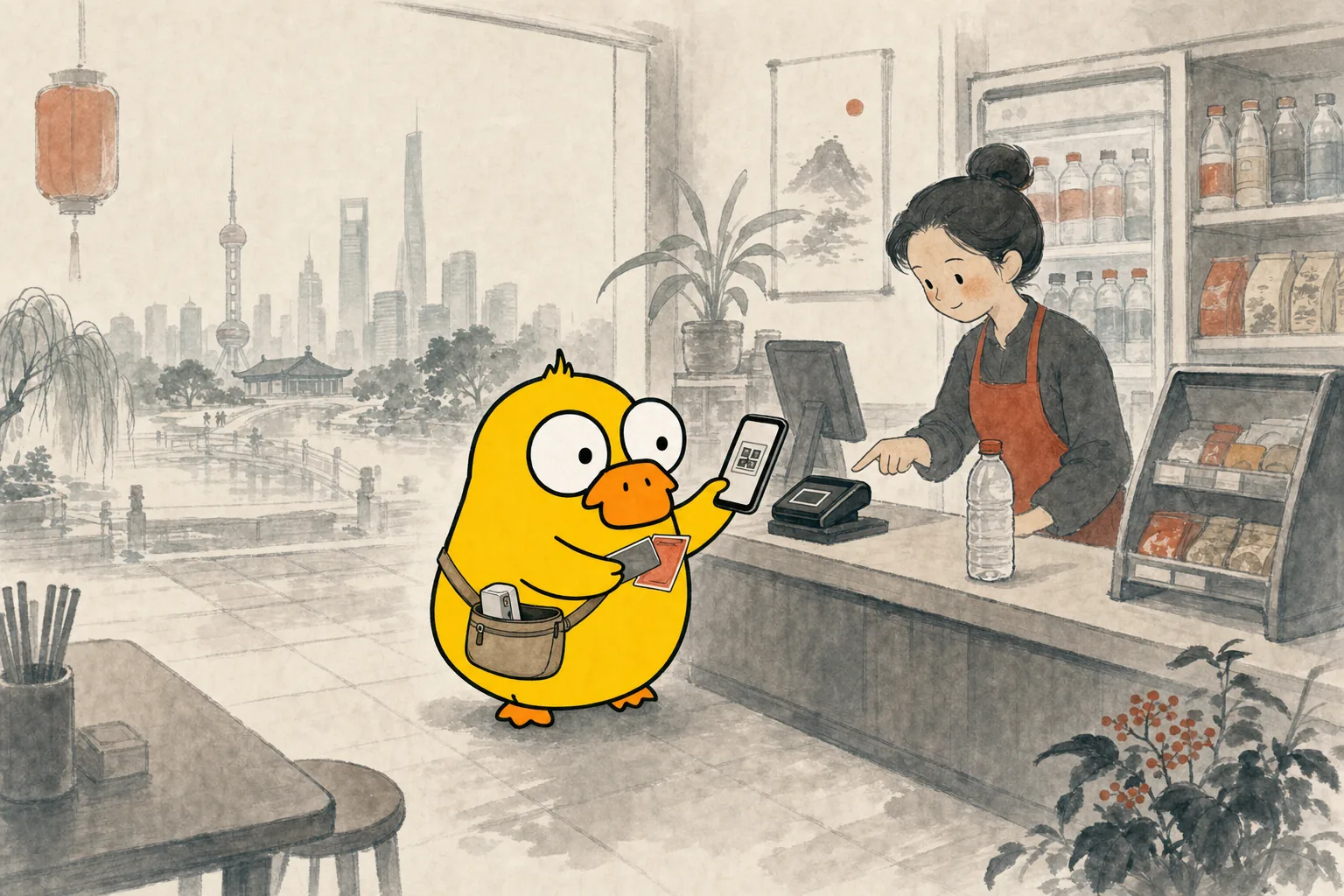
Mobile payment is wonderfully convenient, but it should not be your only way to pay.
Situation 3: Making your first mobile payment
The problem
Everyday spending in China revolves around mobile payment. International visitors can generally register for Alipay or WeChat Pay with an overseas phone number and link an eligible foreign bank card.
But a successfully linked card does not guarantee that every transaction will go through. You may still run into an SMS verification request, a block from your bank, a poor connection or a payment page that does not accept foreign cards.
What to do
Set up your payment apps before departure and make sure your usual phone number can receive messages abroad.
Once you arrive, test the setup with a small purchase. If a payment screen appears only in Chinese, look for an in-app translation option.
Your backup
Carry a second physical bank card, a small amount of RMB cash and a power bank.
Cash is still valid in China, although mobile payment is far more common. A small shop that rarely handles cash may not always have the right change.
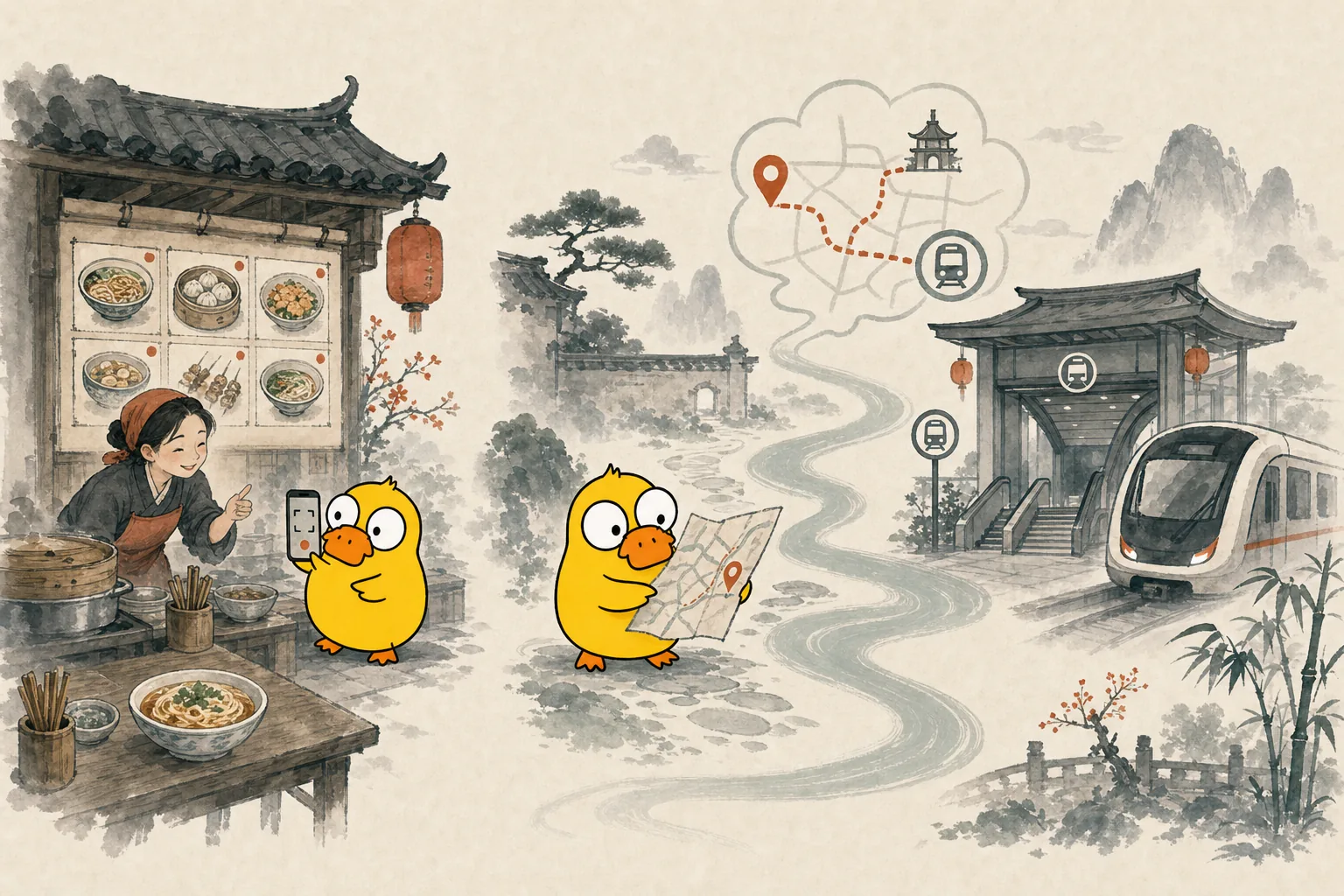
A picture, a short sentence and the correct place name often work better than a paragraph of machine translation.
Situation 4: Ordering at a local restaurant
The problem
Some restaurants ask customers to scan a code and order on their phones. You may then discover that the entire menu is in Chinese. Spice levels, ingredients and allergies can be even harder to explain.
What to do
Use camera translation or an in-app translator to read the menu. Once you have chosen, point to the photo and ask the server to confirm.
Your backup
If you have a food allergy, prepare a clear bilingual allergy card before the trip. Save it to your photo album, and consider carrying a printed copy as well.
Create a bilingual food-allergy card
Situation 5: Navigating a city
The problem
The map services many international visitors normally rely on do not work as well in mainland China. Amap has an English interface, but English place names and search results are not always precise. A business may also have several branches with nearly identical names.
What to do
Save each destination in both English and Chinese, and check the map pin carefully. If an English search fails, copy and search the Chinese name instead.
For stations, hotels and large shopping centres, make sure you have the correct branch, entrance or station.
Your backup
Take screenshots of the day’s important routes and keep the destination name in Chinese. If you get lost, show that name to a member of staff.
Situation 6: Taking the metro
The problem
Metro systems in major Chinese cities usually have colour-coded lines, numbered routes and signs in both Chinese and English. If you know the line, direction and interchange stations, the journey itself is generally straightforward.
The details can still catch you out. You will pass through a security check, a single station may have many exits, and some lines become extremely crowded during the morning and evening commute.
What to do
Before setting off, check the line, direction, interchange stations and the exit closest to your destination. If your schedule is flexible, travel outside peak commuting hours.
Your backup
If a mobile transit code does not work, go to the staffed service desk or use a ticket machine instead of repeatedly refreshing the app at the gate.
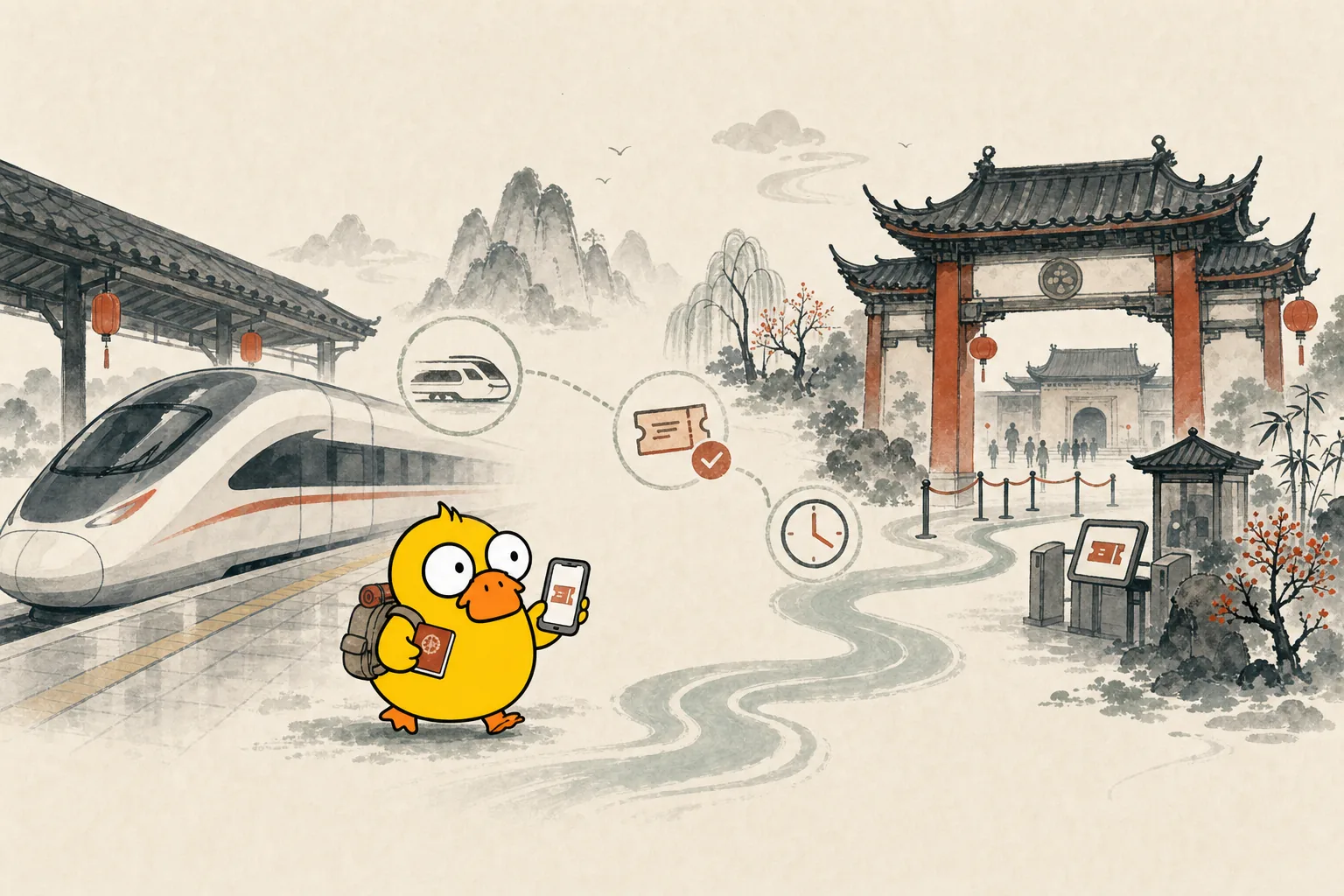
High-speed trains and popular attractions test your documents, timing and reservations—not your conversational Mandarin.
Situation 7: Taking a high-speed train
The problem
One city may have several railway stations, and the largest stations can feel like airports. Knowing only the city name is not enough.
Beijing Railway Station, Beijing West, Beijing South and Beijing North are four different places. Treating them all as “Beijing Station” is an easy way to miss a train.
What to do
Carry the valid passport used to book the ticket. Check the exact station, date, train number and departure time more than once.
For your first high-speed rail journey, arrive early enough for security, the walk to the waiting area and finding the correct gate.
Your backup
Save a screenshot of your booking. If you cannot find the entrance or gate, go to an information desk and show staff your ticket and destination.
Situation 8: Visiting an attraction that requires a reservation
The problem
Popular museums, scenic areas and cultural experiences may require advance booking, and some reservation pages are mainly in Chinese.
Tickets can disappear quickly. A booking form may also handle foreign passports differently from Chinese identity cards.
What to do
Check the attraction’s official website or verified social account in advance. Confirm when reservations open, which document you need at the entrance and whether the system accepts foreign passports.
Once you have booked, save the confirmation and take screenshots.
Your backup
Give each day one alternative that does not require a reservation. A failed booking then changes the plan rather than ruining the day.
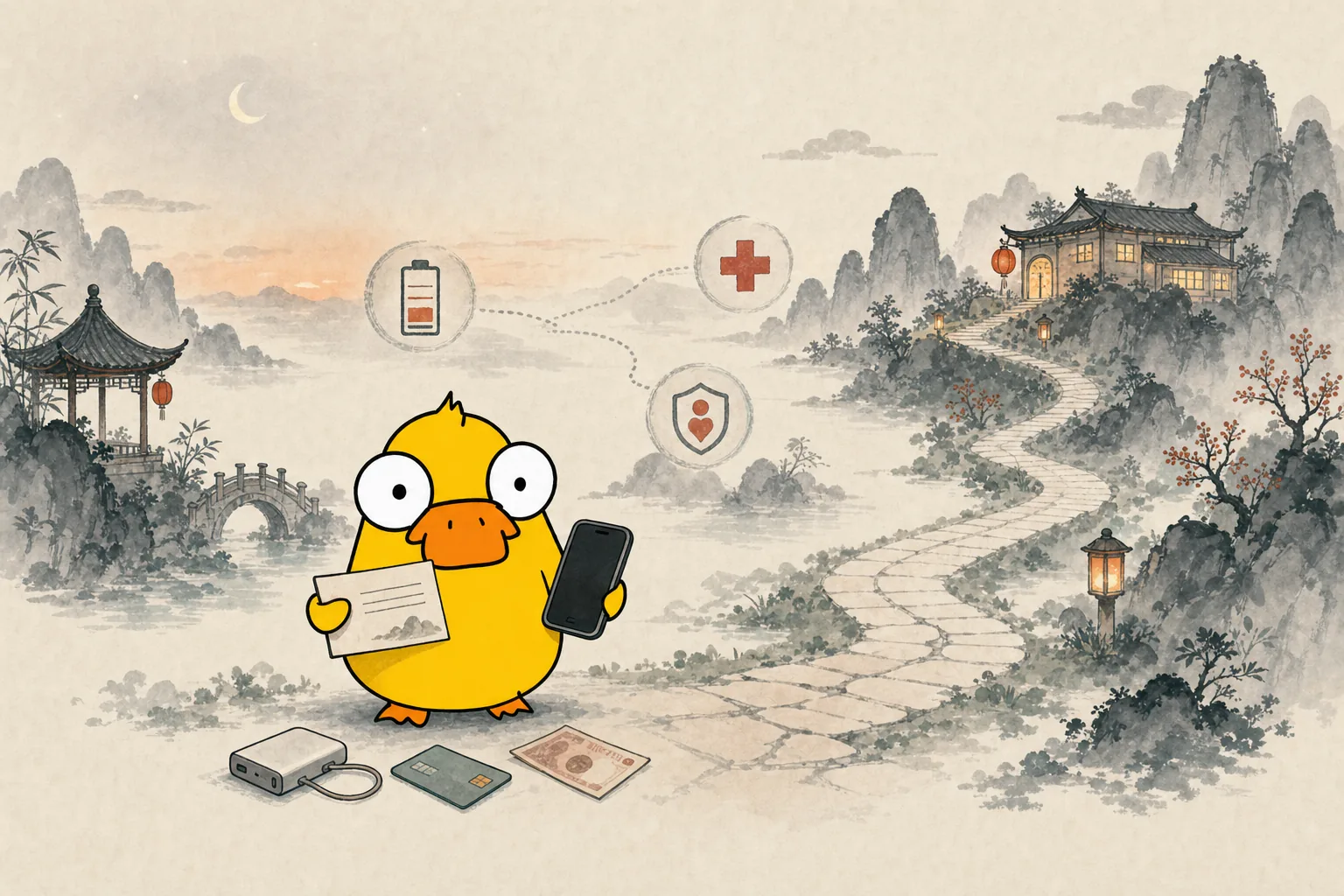
The most useful travel skill is knowing how to get home after your phone stops working.
Situation 9: Losing your connection, battery or translator
The problem
In China, your phone may serve as your wallet, map, train ticket, menu, translator and communication tool all at once.
If the battery dies, the connection drops or an app stops working, you can lose much more than a single feature. The whole day may become harder to navigate.
What to do
Carry a power bank. Save offline maps and screenshots of your hotel address, tickets and important reservations.
Do not keep every essential detail inside a single app that needs an internet connection to open.
Your backup
Write down your hotel’s Chinese name, address and phone number, along with an emergency contact, and carry the paper with you. Keep a small amount of cash and a physical bank card as well.
At the very least, make sure you can still find your way back to where you are staying without your phone.
The short answer
Not speaking Chinese does not have to stand between you and a wonderful trip.
You do not need conversational Mandarin before you leave. A little preparation gives you three useful layers of protection:
- Digital: connectivity, payments, maps, translation and transport;
- Written: Chinese versions of hotel names, stations, attractions and food-allergy information;
- Backup: screenshots, a paper address, cash, physical cards and a power bank.
China is not an inaccessible world without Mandarin. It simply runs on a digital ecosystem that may be different from the one you use at home.
For a first-time visitor, a working phone, accurate information in Chinese and a plan for the moment technology fails will solve most communication problems.
And when you still do not know what to do, show someone the Chinese information on your screen. Give a stranger the chance to help.
Then set off with a little curiosity.
Comments
Listening for comments…